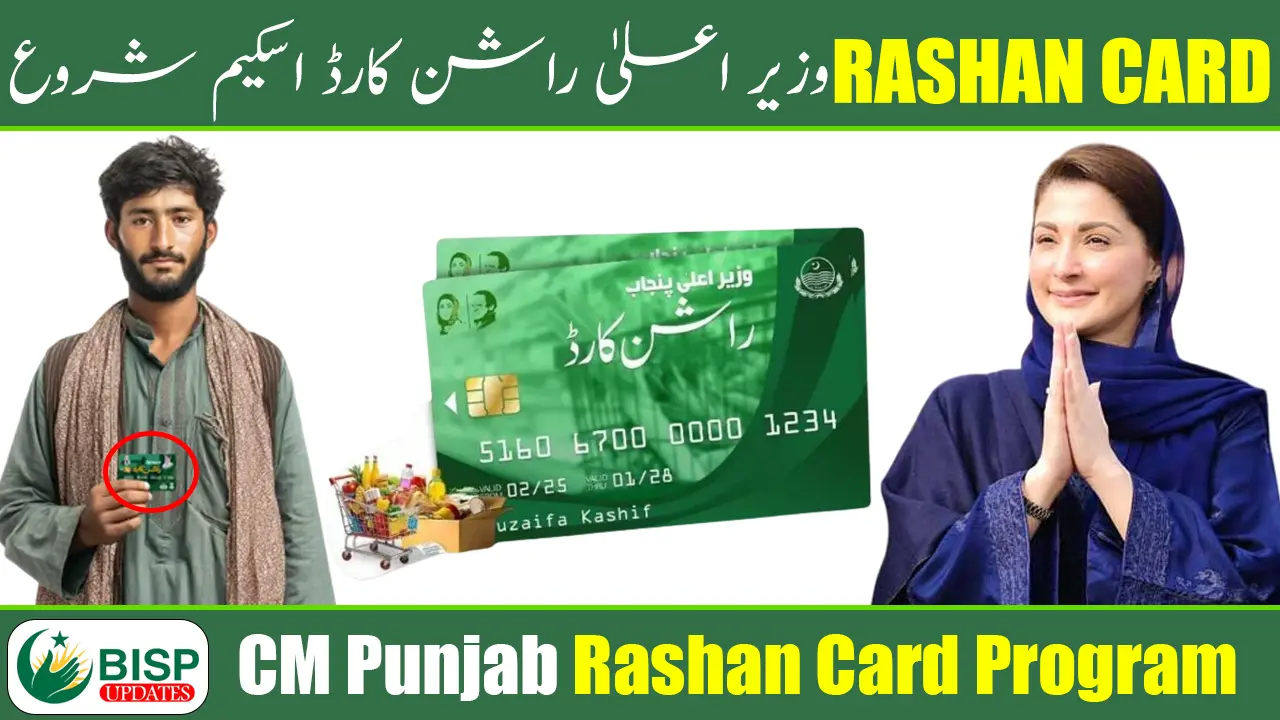
Living in Pakistan today, I’ve personally witnessed how inflation can squeeze household budgets, making it hard for low-income families to manage daily needs. The Government of Punjab, under the visionary leadership of Chief Minister Maryam Nawaz, has launched a groundbreaking initiative to provide relief through the Ration Card Program 2025. This program officially rolled out with registrations starting in August and full distribution mode by September, allocates a massive Rs. 40 billion to ensure essential food items like flour, sugar, ghee, rice, pulses, and cooking oil are accessible at subsidized rates. This scheme targets five million deserving families, offering discounts of up to 40% on staples to cover rising costs and ease daily struggles.
As I explored November updates, I saw thousands of households benefiting from streamlined, digital processes and transparent mechanisms. For anyone searching for details on the ration card online, this in-depth guide serves as a one-stop resource to cover the core objectives, eligibility, criteria, application steps, and benefits. From a personal perspective, being a part of local awareness campaigns, I noticed how recent updates, historical context, and CM schemes are transforming lives, helping every earner navigate rising costs effectively while encouraging more people to apply. This program truly represents a significant leap in social welfare efforts, showing how thoughtful efforts can make essential support tangible and reliable.
What is the Punjab Ration Card Program 2025?
The Punjab Ration Card Program 2025 is a targeted welfare scheme launched in August to help vulnerable populations alleviate financial burdens from inflation. It provides subsidized access to essential groceries, letting low-income families afford nutritious food without compromising education or healthcare. Beneficiaries receive a digital card linked to their CNIC for purchases at Utility Stores Corporation and Bank Punjab branches, with subsidies applied at the point of sale. The program, with a total budget of Rs. 40 billion, covers over five million families, offers 40% discounts, and translates into monthly savings of 2,000-3,000 Rs for a family of four. Urban centers like Lahore, Faisalabad, Multan, and rural villages benefit from mobile registration vans and tehsil-level counters, while the digital backbone powered by NADRA tracks usage and prevents misuse. Integrated with federal programs like BISP 8171 and Ehsaas Kafalat, it ensures smoother eligibility and equitable access to essentials, aligning with UN Sustainable Development Goals.
Eligibility Criteria for Punjab Ration Card 2025
From my experience helping families understand welfare programs, eligibility for the Punjab Ration Card Program 2025 is clear and fair. Household income below Rs. 60,000 per month lets families qualify, considering urban-rural disparities in living costs. Registration through BISP 8171 or Ehsaas is simple, and a valid CNIC is mandatory to ensure only eligible residents benefit.
Government employees in Grades 1-4, marginalized groups like widows, orphans, disabled, and single-parent households are prioritized, while high-income earners and non-Punjab residents are excluded. Even laborers in Lahore or rural farmers with small holdings can apply. With NADRA biometric verification, approvals are fast, fair, and help aid deserving families efficiently.
How to Apply for Punjab Ration Card Program 2025: Step-by-Step Guide
Applying for the Punjab Ration Card Scheme 2025 is user-friendly and works for diverse users. Keep documents like CNIC, proof of income, and family details ready.
- SMS Registration: Send CNIC to 8070 for immediate preliminary eligibility via BISP/Ehsaas data.
- Online Application: Use punjab.gov.pk/rationcard, create account, fill form, upload CNIC, supports Urdu.
- Verification: Automated checks via NADRA/BISP, usually 7-10 days, manual verification at tehsil office if needed.
- Approval & Collection: Receive application ID, track status, collect card at Bank of Punjab or Utility Store, biometric confirmation.
- Rural Support & Helpline: Mobile vans tour districts, call 0800-12345 for help, double-check forms, free process, PDF forms available.
History of Similar Schemes in Punjab
Looking back, Ration subsidies in Punjab date to post-independence eras, with early systems distributing wheat during shortages. In the 1980s, formalized cards under Zia-ul-Haq faced corruption, while the 2000s introduced Ehsaas under Imran Khan, emphasizing cash transfers. Over time, provincial variants like the 2019 Sehat Card appeared. The BISP 8171, launched in 2008, laid a digital foundation, supporting 9 million nationally.
Today, the Punjab Ration Card 2025 evolves these efforts by adding subsidies to cash aid, with past budgets ranging from smaller Rs. 200 billion federally to Rs. 40 billion Punjab-targeted focus. Lessons from COVID-era distributions emphasized digital verification, shaping today’s scheme and underscoring progress toward efficient, inclusive welfare.
Comparisons with Other Programs
When I compared the Ehsaas and Punjab program, I noticed that Punjab offers direct subsidies versus cash, giving higher discounts of 40% compared to 25%. It’s budget-wise province-specific yet scalable, which makes it adaptable for more families. Unlike Sindh’s similar scheme, Punjab’s digital integration is far more superior, greatly reducing leaks and ensuring fair distribution. Internationally, it even mirrors India’s PDS but with better tech.
Within CM Punjab schemes, it complements initiatives like the Female Electric Bike Program, addressing food needs while promoting mobility. The key strengths are transparency and scale, though weaknesses include dependency on NADRA uptime. Overall, this comparison highlights the Punjab ration card as a complementary powerhouse in welfare innovation.
Key Features of the Punjab Ration Card Scheme 2025
The Punjab Ration Card Program 2025 brings innovative features that merge technology and social welfare into a strong support system. This digital ration card is a game-changer, replacing traditional paper-based setups prone to fraud. It’s electronically linked to your CNIC and verified through NADRA databases, allowing real-time tracking of purchases with full transparency and accountability.
The subsidies are generous, giving up to 40% off on flour (atta), sugar, ghee, rice, pulses (daal), and cooking oil. Each family can get rations worth Rs. 6,000 per month, based on household size and needs. With over 500 Bank of Punjab branches and Utility Stores across the province, distribution is easy, even in rural areas. Linked with BISP 8171 and the Ehsaas Program, it enables automatic cross-verification, reduces paperwork, and speeds up processing—making it one of Pakistan’s most efficient digital welfare programs.
| Feature | Details |
| Program Name | Punjab Ration Card Program 2025 |
| Total Budget | Rs. 40 Billion |
| Target Beneficiaries | Over 5 million low-income families |
| Subsidies Offered | Up to 40% on flour, sugar, ghee, rice, pulses, and cooking oil |
| Card Type | Digital, CNIC-linked, NADRA-verified |
| Distribution Channels | Bank of Punjab branches and Utility Stores |
| Monthly Allowance | Rations worth Rs. 6,000 |
| Integration | BISP 8171, Ehsaas Program, NADRA databases |
transparency and social justice for widows and the disabled. According to government reports, this digital shift improved processing speed by 50%, proving the effectiveness and sustainability of the scheme.
Benefits of the Punjab Ration Card Program 2025
The Rs. 40 Billion Punjab Ration Scheme brings multifaceted benefits that go beyond basic discounts on essentials. I’ve seen how the 40% subsidy provides real financial relief to struggling families, saving them thousands annually for education and health, which is crucial in inflation-hit times. By ensuring food security and guaranteed access to nutritious items like pulses and rice, it helps in combating malnutrition. Government data shows how such programs have reduced hunger rates by 15%, proving its effectiveness.
Through digital tracking and transparency, the scheme limits middlemen, fostering trust among beneficiaries and cutting corruption common in analog systems. Its inclusivity stands out, with special provisions for women-led households, promoting gender equality. The integration with Ehsaas further amplifies impact, bringing combined benefits. Economically, it stimulates local markets, increasing purchasing power, allowing people to invest in small businesses and children’s schooling, thereby breaking poverty cycles. Socially, it builds community resilience, as testimonials from recipients show how the program restored dignity. Overall, it serves as a holistic tool for sustainable development, showing that the Punjab ration card 2025 is more than just aid—it’s empowerment.
Conculsion
The Punjab Ration Card Program 2025 stands as a strong symbol of hope, stability, and empowerment for millions of families in Pakistan. With its digital transparency, 40% subsidies, and easy access through NADRA and BISP integration, it ensures that no deserving family is left behind.
Beyond offering food support, it uplifts communities, promotes economic resilience, and strengthens social justice. As inflation continues to challenge households, this initiative proves that smart governance and compassionate leadership can truly transform lives.
FAQs
Who can apply for the Punjab Ration Card 2025?
Families earning below Rs. 60,000 per month and registered with BISP 8171 or Ehsaas are eligible. Priority is given to widows, orphans, and disabled individuals.
How can I register for the Ration Card Program?
You can apply by sending your CNIC number to 8070 or through the official portal at punjab.gov.pk/rationcard with basic details and documents.
What benefits does the Ration Card provide?
The card offers up to 40% discounts on essentials like flour, sugar, ghee, rice, and pulses, saving families around Rs. 2,000–3,000 monthly.
Where can I use the Punjab Ration Card?
It’s valid at Bank of Punjab branches and Utility Stores across Punjab, where the subsidy is automatically applied during purchase.
How long does approval take after applying?
After verification via NADRA and BISP, approval usually takes 7–10 working days, and you’ll get a message for card collection.
